Friday, April 5, 2013

An Entrepreneur's Trip to a “Depressed” Spain & France: KKK Light, Old Conflicts, Spicing up Tapas & Playing Gipsy Kings


It may have been a family trip that took me to Europe but the lessons of entrepreneurship kept pouring through. Since my last trip to the Mediterranean took me to Israel, it was hard not to compare the endless "For Sale" and "To Rent" signs in Spain and France - not to mention the abandoned construction sites vs the booming Israeli economy where tech giants like Microsoft and Intel plaster their names on buildings everywhere as a way to hire engineers. 


Hiring at the other side of the Mediterranean: GDPs
Israel 3.3% vs .01% (France) -1% (Spain) 2.3% (U.S.)
As a tourist, Spain was a delight. People were friendly, helpful, beautifully mannered and the cities clean and moderately priced (cheap Spain is long gone – thanks to
 
the Euro but still a bargain compared to France and Switzerland). Yet, as an entrepreneur who wonders how countries reinvent themselves in the new economy, peering into the culture is endlessly fascinating and there are surprising lessons to be learned.

In France, the talk was about taxing millionaires and the scandal over former President Sarkozy's apparent money-grubbing from the L'Oreal heiress, Liliane Bettencourt (see 10 richest list below). In Southern Spain, it was about finding new tourists and the spectacle of Semana Santa - Easter Week. In Israel, it was Obama's visit and the backlash over the quantity of multinational companies in Israel.  There are so many Israelis working for them that the public has begun kvetching - enough to inspire a major newspaper to calm them down with a Passover article about loving thy multinational. Southern Europe should have this problem.


Is it possible that what binds Spain culturally may also be what holds them back? What has long conflicted them may also be what holds the most promise, economically. I am saying this after spending days viewing the Easter parades which are a mass wonder. Here, people vie to join brotherhoods and dress like grand wizards of the KKK, endlessly hauling around massive tronos – precious-metal encrusted altars with Jesus or Mary – in a swaying lockstep with well rehearsed processional music to follow. You get to notice that people in these groups seem to stand several inches taller than the spectators, suggesting an elite group of some kind. I'm guessing taller is better if you want to go far in Spain. In any case, these multiple processions hold the nation in a thrall as it attracts visitors from all over Spain and filling TVs with wraparound coverage. As for the dining that followed – it is a bit of challenge to have anything other than tapas, ham or chorizo.

[Note - only Americans get the chill when they see the conical capirote and masks which are a pre-medieval tradition allowing the penitents to hide their identities. Leave it to the USA and the KKK to take the penitence right out of that ceremony!]


Spain is a very convivial country and once the solemnity of the marches had passed, the fascinating old streets lined with tiny bars and restaurants erupt in conversation. When we spent time chatting with people, both in Paris and the South of Spain, everyone we met had a company job and more often than not, with some branch of the government. With as many as 50% of the youth unemployed in Spain, and France suffering a similar, though less extreme recession, we were obviously hanging with the winners.

In Israel, everyone we ran into from family to former employees were entrepreneurs who had gone public, sold their companies to IBM or were working on the next big healthcare product. If they had a job, it was with an entrepreneurial company. Since we were visiting my daughter on her study abroad in Granada, Spain this was hardly scientific but it is indicative. 

Even so, it would be hard to tell that either Paris or Spain was suffering economically. The social net is broad in Spain. In France, you only see it in the hardscrabble tenements on the outskirts of town and the satellite cities on the way to the airport. In Spain, the giveaway is the mass of real estate signage and in the Costa Del Sol, it's concrete apartment skeletons and blocks of empty mansions waiting for new tax exiles and dubious businessfolk from northern Europe and Russia.

What you don’t see, are the signs of new enterprise, innovation or hero entrepreneurs. Only Britain was able to boast that with sale by Nick D’Aloisio, the teenaged founder of the AI-based news summary app Summ.ly to AOL for a reported $30 million. It was encouraging when, at the Beauvais airport about 2 hours from Paris we saw a sign boasting of the siting of major food, bio and tech companies. It was only in Paris that I came close to an Entrepreneurs - in this case, something at the rockbottom of the ladder when a shabby-looking man in the Marais heard that I was from New York and asked how much it would cost to live there for months. He was a game designer who was looking to raise capital. He said there was no VC money in France - and my media friends concur - he wanted to know what his prospects were in NY.

Israel, on the other hand was full of Angel money because it has cascaded down from the entrepreneurs who had made in big in the past 20+ years. Companies like Teva Chemicals have VC funds and they are very active in backing healthcare start-ups. In Spain, the government actually set aside a few hundred million euros to help failing businesses but - surprise, surprise - about half of the money disappeared into the hands of “agents” who were supposed to distribute it. Is it my imagination, or is true that socialism has a way of making bureaucrats act like "entrepreneurs” and the business class like serfs?

Zara’s Amancio Ortega
Billionaire Count: US 425, 
France 24, Spain 20, Israel 17
Pop: US 319m, Fr. 68m, Sp. 48m, Isr. 7.9m
What makes Spain so interesting is that it is the home of the most successful artist ever and the world's third richest man: Picasso and Zara’s Amancio Ortega. The world’s richest man, Carlos Slim, is from   Mexico. The 2nd and 4th richest are our own Bill Gates and Warren Buffet followed by Larry Ellison the Koch Brothers (oil and steel) and the French perfume and fashionistas with the L'Oreal and LMVH fortunes.

In other words, the France, Spain, Mexico and the US comprise the 10 richest businesspeople in the world. But only the U.S. economy, while troubled, is growing and the others are in significant trouble. The difference is that most of the American players (Gates, Ellison and to some extent, the Koch brothers) are involved with innovation and that tends to throw off venture money. In Spain, the money is in a clothing empire that is mostly vertically integrated and grew out of the same organizational principle that guides the Easter tronos. As Wikipedia put it: “Ortega produced clothing using thousands of local women organised into sewing cooperatives.”

In the former Spanish colony of Mexico, Carlos Slim, a successful stocktrader, leveraged the Hispanic tradition of syndicates by buying them up when financially strapped, and going on to monopolize the communications industry, and then to becoming the world's richest man.

Spain’s Ortega also harnessed the creative element of Spanish culture – design – arguably putting him, at some level, in the same class as both Picasso, the groundbreaking iconocast as well as the devoutly Catholic architect of Barcelona, Antoni Gaudi. It is a little more complicated than that: Zara is known as an expert copier of others' ideas and has no famous in-house designer - there are no stars, everyone carries the Zara trono. The fact that it originates from the same Galician region in the north as the former dictator, Francisco Franco is not entirely lost on the media either and the empire is known for its secrecy and lack of advertising. Picasso's genius is as much about art breakthrough as it is "improving" on others ideas. He is attributed by many, including Steve Jobs for saying, "good artists borrow, great artists steal." Finding Picasso's "victims" is as much a beloved pasttime of art historians as is the media finding Zara's supposed knock-offs.


While Israel has no one in the Forbes top 10 or even top 100 list, it does have 17 billionaires which, if you scale the economies (7.5 million vs. 48 million) makes them extraordinary. If you throw in Sheldon Adelson (Comdex and casinos) and maybe Michael Bloomberg (financial data terminals) as honorary Israelis, you see how innovation-driven wealth  has reflected well on their economies. Where Spain gives welfare to businesses only to stimulate bureaucrats, the US and Israel have, in critical ways, fostered the cascading effect of venture money.
The Alhambra
As a result, most stores in Paris sell clothing and then food. Unless you love fashion, you won't see much interesting in storefronts like you would in New York. Most restaurants in the South of Spain offer just about the same food choices. The cuisine is far from adventurous and nothing like Mexican at all – mostly bland and starchy. Despite all the seafood in the Mediterranean, if you want to eat a lot of its fresh bounty, and as seasoned as you like, you would be advised to go to a Chinese buffet.


A typical Spanish building 
in the background 
So why is Spain full of this art design genius, incredibly passionate about Catholic processions, remarkably civilized but mired in recession? The answer is probably the Moorish invasion which lasted from 711 to 1472. Just as Southerners talk about the Civil War as though it were yesterday, the Arab invasion is still alive in their blood. Most Spanish design until the 20th Century was essentially Catholicized Arab art. The fantastically decorated churches and the mass, weeklong processions are a living way to declare their independence from their past even though they are still living with its visual consequences - from the tiles, arches and lanterns to their sweetly gutteral g’s and x’s. Even gipsy flamenco is really Arabian music preformed by Spanish outsiders who often neighbored the Arab quarters. The Moroccan curio stores all over Granada constantly remind you of this with their intense piped music.


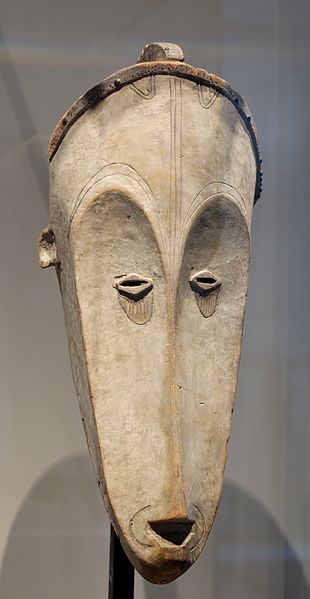
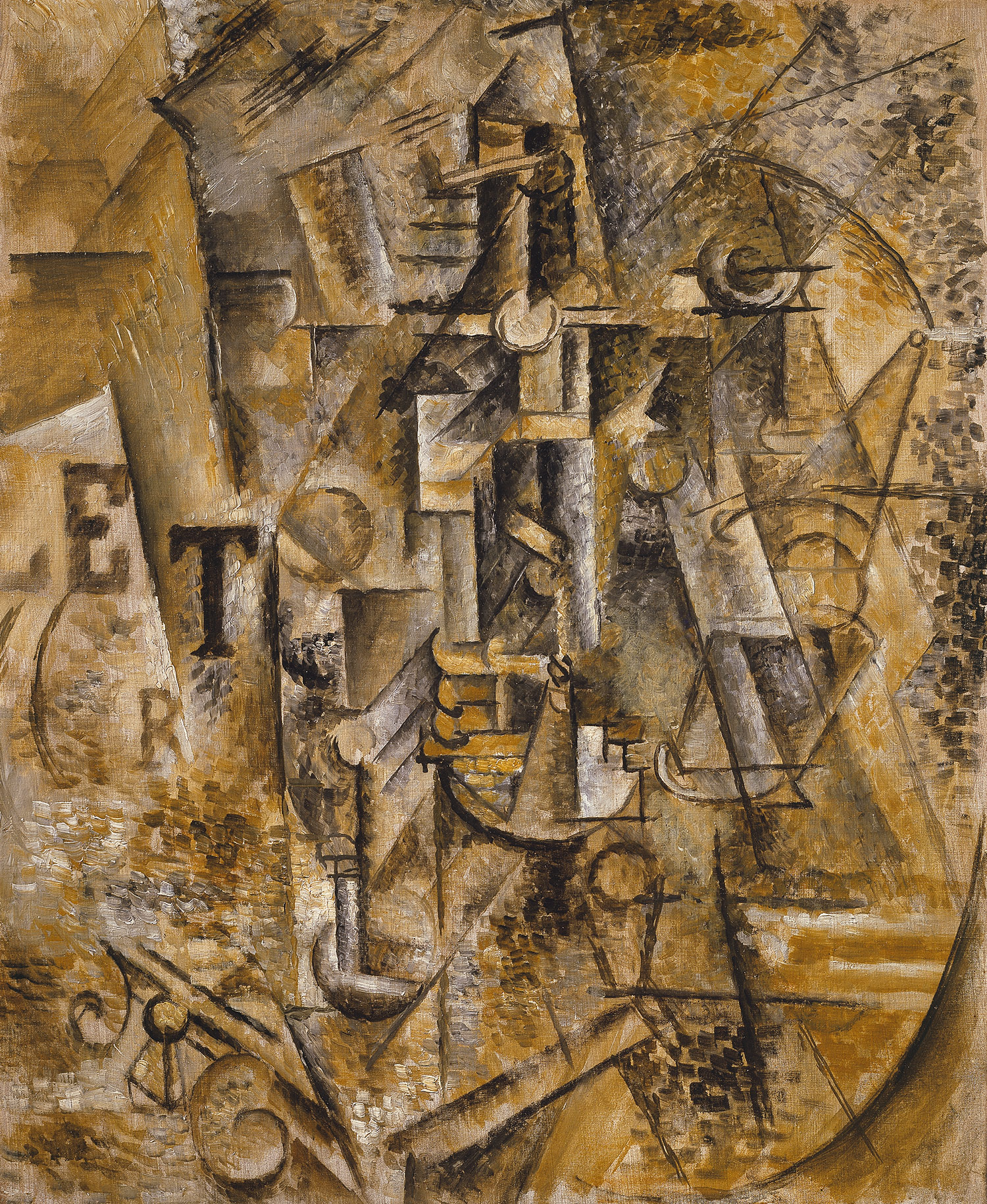
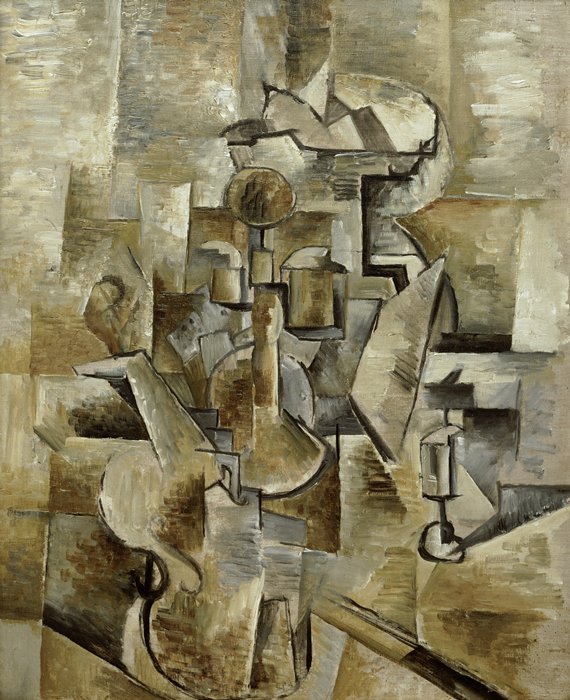
How Picasso "Pivoted" his Art

Picasso 1905
Sees this kind of African Mask 1907
And Paints "Demoiselles D'Avignon" 1907
And this Matisse "Blue Lady"


Paints "Still Life with a Bottle of Rum" 1911


Which became Cubism when.....
Picasso sees Braque's "Violin and Candlesticks"

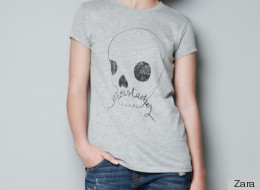
Is Zara in a similar business to Picasso?


Street Artist's "Mustache Design" (Source: HuffPo)

Becomes Zara's "mustache" T-shirt

It is a fair conclusion that what conflicted Spain the most, is also what defined and enriched them the most. Even Picasso went from being a precocious artist to an iconic genius, essentially by reaching beyond North Africa and into sub-saharan African where he recognized their art not as primitive but as a way to extend beyond normal dimensions and consciousness. While Picasso has denied this, many experts date his transformation to a visit to the MusĂ©e d'Ethnographie du TrocadĂ©ro in the spring of 1907 where he was influenced by African and Tribal art several months before completing his groundbreaking Demoiselles d’Avignon. Spain, after all – and Picasso comes from the old Arab town of Malaga - is as close as Europe gets to Africa. Their genius seems to be in mediating it and apparently, Spain has recognized that by promoting the Arab-Iberian experience through a number of cultural, business and political initiatives. You also get a hint of the north-south division of the country - the industrialized Gaelic north (as in Galicia) and the creative, easy-going Arab-Iberian south.

Gypsies playing music for tips

Gypsies playing to well-heeled tourists
Creative or not, you still have to wonder if the apparent lack of variety in their food reflects a lack on enterprise - nitrogen-wielding, JosĂ© Andres notwithstanding. While tapas bars have become popular in the US, I would argue it is only because enterprising US chefs have spiced up the offerings both literally and figuratively. Likewise, when it came to the music I saw plenty of gypsies playing without getting coins from the audience because, I would imagine, no one knew their songs. Doesn’t every tourist want to see a real gypsy sing Bambaleo on the streets of Granada? I’d bet these roaming troubadors would quadruple their take if they played what we wanted to hear not just what they happen to know. Sporting a do-rag wouldn't hurt their bottom lines either. As for the government, they are working hard to promote Eurotourism to Spain but when you riffle through an all-Russian magazine and see an ad for the Costa del Sol in English you get to wonder what happened to their translation budget?

No doubt, Spain and France are more innovative than they get credit for but they are almost certainly not innovative enough. They don’t glorify their tech hero’s like we do. The binding culture is tied to the past and is often a flight from ancient conflicts. The Israelis, whether they like it or not live with conflict and that seems to have sparked their phenomenal tech innovation. (This opinion piece in the Wall Street Journal makes a compelling argument for just how much.) Perhaps it is time for these Mediterranean countries to compare notes and learn from each other. 

Since I didn’t hear anyone speaking Hebrew and matzoh was nowhere in evidence,  I’m guessing the Sephardic Jews haven’t exactly been wooed back nor are they likely to have forgotten he past either. To complicate matters, Spain has worked hard to win friends in the Arab world, which was much represented among tourists. Even so, Spain still possesses the mining center of Milella and the town of Cueta on the Moroccan coast – which was the historic launchpad of the Moorish invasion so, while there is much trade, this remains an old dispute. 


One final point, according to my daughter, the young people have their own ideas about Spain’s future. Among them is a growing disinterest, even embarrassment over bull-fighting for being too violent.

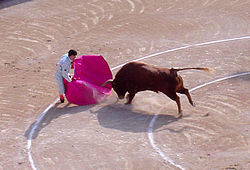


So here is my suggestion: Rubberized bulls horns, Kevlar toreador suits and as for the picadors – the guys who slow down the bulls by stabbing them with lances – tasers bro’. I’ve been told there is no chance of anything like this happening but if I could, I would gladly spend my days in a charming seaside village in the Costa del Sol. Hey, I’ll even open a bagel joint.


A great vacation destination
The Sierra Nevadas and the Alhambra under the Granada Sky


Friday, February 15, 2013

Could the Post Office Pivot?


Imagining what might happen if Entrepreneurs were in charge of those friendly folks in blue outfits.

You know the joke: How did the Post Office fire 20,000 people? With an email, of course. 

The real joke is that the Post Office itself was fired by the Internet.

So what if the Post Office had embraced it - becoming the servant of the Internet instead of its victim?

Naturally, they argue their $15bn annual losses and the disappearance Saturday deliveries have little to do with the Internet. It is Congress' fault for hobbling them with a $5 billion annual pension prepay.

Yet, if they had embraced the Internet, their customers might actually have cared enough to go after Congress on their behalf. 

That’s what Social Media does for you, Mr. Postmaster - a public that cares could organize itself so that Congress would have remove the mandate or get voted of office. But why should we care that much?

So let’s imagine for a minute that the Post Office wasn’t a quasi-government institution with Federal powers, huge real estate holdings that also works as a public service, protected job reservoir and piggy bank for Congress.

Let’s imagine it was taken over by a bunch of Entrepreneurs who weren’t hobbled by politics or patronage and would fully embrace the Internet Age rather than dabble around the edges.

I'll start with funny since that often produces the best ideas. (And please - I welcome your suggestions!)

They could do what the MTA did and put a Starbucks in every Post Office so that customers could enjoy a Mail Latte. (Bad pun - but improving performance through universal mail tracking would be a good start.) 

More importantly, they would have made a lot of deals. They would have done what RPost does – certified emails. That would soon spread to certified documents and an entire business in maintaining and serving them. Think of the Post Office as Fort Knox of our valuable docs. (Since no one has reported actually seeing gold in Fort Knox lately, there may be room.)

Strategically, the Post Office threw their lot in with the kind of mail we really don’t want - Junk Mail - and turned their back on the stuff we do want – delivered stuff from the Internet.

They could also have been an enabler of online bill paying even doing the the bill handing from the postal center. They could have even started their own junk-free email service. A paid channel for email that guarantees authenticity so you don't have to worry if you a being phished. 

Or they could have turned your cheapskate eCards into printed and delivered physical cards for a fee of say, $5. Or your Facebook pictures into next day delivery Photobooks.

Perhaps they could have turned each Post Office into a local logistics center where relatively low cost area business deliveries could take place. Anything from your local online purchases – and returns – to prescriptions, dietary supplies, Newspapers, milk, artisinal bread, your laundry and other essential or finer goods of life. Dropped off first thing in the morning and delivered to you home by during the day. Or just held at the PO.

Maybe.

If I were a politician - and this is the bigger issue - I would see the Post Office for what it really is - a proxy for Government-backed agencies in the Internet age. In other words, they are an index of how government can or cannot cope in this new age. If they don’t find a new model for running it – it is not the Post Office that is going the way of the Dodo, it’s the current 2 Party system that runs government that may be on the extinction list.

Both the Post Office and the political system are relics of the Industrial Age where they served either big labor or big business.

So cutting back is really not a strategy – it will only spur more people to think of more alternatives to the Post Office. Their real future lies in reinventing themselves.

So, what do you think they should do?


 =======================================================================

Carbon dating: as a rough index of the rate of change and what happens when pundits predict here a little story.

Back in the early days of the Internet, when Yahoo was just taking off, a Start-Up made case for the end of the Post Office as part of their pitch. It was one of the first arguments we saw for Internet disruption. At the time, Amazon hadn't made a dent in the Bookstore Business. Emails were still a trickle.

The Entrepreneur said the Post Office had billions tied up in trucks, warehouses, sorting machines, deliverypeople and office clerks and all could be eliminate by email.

His company made an email server.

He was dead right but his timing was off by about 18 years. The Post Ofice didn’t stop – in some ways they grew because their early technology lead enabled vast amounts of junk mail. In other words, they figured out how to make a better buggy whip and sold more of them. They introduced tons of technology – sorting machines with with artificiall intelligence but mostly better ways of mastering of junk mail, better bar, codes Zip Plus, a national database of address.

But they were never willing to challenge their own function and invest where the business will be. In other words, they went with improvements and refused to disrupt themselves. So the internet did it for them.  

So they went into a long decline. 

But they have Federal powers they get free parking anywhere, no tickets, no towing.  

Worst case - they could license that right to really rich people. That would be illegal, of course, unless those people took a job with the Post Office. Hmmm.

Marco Rubio’s Water Dive - Body Language as Storytelling


When Marco Rubio made his famous furtive dive for water, mid-speech during in the State of the Union rebuttal, he ignited more comment than the speech itself.

To Republicans, this was just a guy in need of a glass of water.

To everyone else, this was a stunning moment of body language telling a story. It is not that he needed water – that’s human enough. Or that he had to go mid-sentence to grab a gulp. 

It was the furtive way he did it.

It looked as if he thought that somehow, millions of people watching him wouldn’t notice if he left midsentence to dive for the water.
 
So was he inexperienced before the camera or was this him telling you that he believed he could hide his true nature in plain site?

At the very least, politicians are supposed to know how to hide their real dealings. What happens if a politician thinks he can somehow turn invisible?

His Democratic rivals are probably thinking, “Imagine what does when no one is looking.”

Or are we reading too much into this body drama?

Imagine if this were an funding pitch instead of a State of the Union rebuttal. 

Would that have turned off investors?

If he had an incredibly compelling pitch it might not have mattered….. anything less would have turned off investors.

So what his rebuttal about, anyway?

Monday, February 11, 2013

"Are You Fundable?" at Ultralight StartUps


We Test the "Rules" of "Are You Fundable?" on Ultralight StartUp Pitches

Ultralight Start-Ups Investor Feedback Forum is one of the leading entrepreneur venues in New York. As founder, Graham Lawlor said to me, it attracted a high quality of pitches. But are they Fundable?


We at the Innovator Evening (iEvening) are friendly competitors and at the Feb 5th event, 3 of their 8 pitches have presented at our iEvening & Startupalooza events in the past.

Since we offer a workshop and a-soon-to-be released book entitled “Are You Fundable?” – it is worth taking a look at what the “rules” are? In other words, what makes a plan fundable (F), what requires a Champion (C), what would appeal to a special interest investor (S) and what needs to bootstrap or rethink its plans (B). This is a distillation of our observation of thousands of business plans and their outcomes. Feel free to disagree – but it will definitely get you thinking.

The winner was an unusual offering that we would not typically see taking the prize at an event like this: a health-related crowdfunding site focusing entirely on giving.

At the same time, the quality of presentations were good. What was missing was the proverbial young engineer with a better, faster, smarter solution to a big tech problem. Oh wait, there was one. He came up quietly to the VCs at the very end, handed out his card and they practically devoured him.

So, while they may have stumbled upon this one breakthrough start-up they had these to really think about. All were good – but were they fundable? (Hint: that’s the name of my upcoming book…..)

1.  Sashka Rothchild - Standbuy
This was the winner – a crowdfunding site for cancer patients to raise money for the unexpected costs of their treatments. Using a very slick site designed by co-founder, Mark Kozlowski who worked at R/GA – a very high end ad design and production company – and citing some critical numbers. she wowed the judges. About a third of all Americans experience cancer and most will find that their insurance just isn’t enough – and they so they wind up owing thousands of dollars. It also helped that a VC happened to have an emotional attachment and was also the first investor in Indiegogo – one of the first and most successful crowdfunding sites.

Sashka had her own cancer experience to relate, which was also compelling.

This is a very interesting proposition on a lot of levels because it is the kind of deal most Angels avoid and  is as much an indictment of our medical system as it is a kind of solution.

Angels have never been fond of crowdfunding sites partly because it depends on the kindness of strangers – a foreign concept for most businesspeople – and because it tends to challenge the Angels’ dominance. But Standbuy won because it was a (C) – a startup that found a champion who happened the first VC to fund IndieGogo and who also cares about cancer. Because of that other VCs will follow.

If you analyze the deal what you get is a site that invites people stricken with cancer bills to hold out their cup. Unlike regular crowdfunding sites there really are no perks – not even a t-shirt or tayband to lure you in. This is about pure compassion for someone you don’t know or really don’t know well. Moreover, the site asks for a 1% premium over the crowdfunding norm of 7% because it is purely focused on cancer.

At the end of the day, what you have then, is an extremely well-designed site that makes asking others to help with your dire needs seem dignified.

You would think that a “misery site” would charge less not more. So, I am hoping that extra 1% would go to promotions which would then attract more potential donors. Otherwise, an enterprising cancer non-profit might be encouraged to go after the same market by charging less - or even more – but then turning the entire donation into a tax deduction.

For that reason this is all about a (C)hampion and not a fundable site in the ordinary sense that investors generally would want to invest if they could. They would want to know how big it could be, how sustainable and what the returns are. Would it have an exit? Who would buy it and why?

We might get some ideas if we went to the biggest issue first. Just how bad is our healthcare system if middle class people who pay their health insurance are reduced to a kind of Hunger Games of sad stories so they can pay for treatment that should have been covered by their premiums?

Very bad. That’s why the Standbuy solution is OK for now but clearly, it isn’t enough. For one thing, I happen to think cancer treatment has become something of a racket. You may not want call it that because of how many people it helps - but if you are reduced to holding out a begging bowl on your way to the clinic then the facts speak for themselves.

For example - a family member was having a mole removed by a plastic surgeon. He saw something that had a slight chance of melanoma. In an abundance of caution we went to the “Big Clinic on the Hill.” After tests, expertly managed patient paranoia, the child turned out to be okay. But, the exploration cuts had made their mark and what a deft plastic surgeon would have gladly done for $1200 was now a $45,000 gouge.

So what exactly did they do for 40x other than dig deeper, take out a couple of lymph nodes and run a slew of tests? (Not to mention, somehow placing me on a number of cancer research Telemarketing lists.)

That’s the solution investors are really looking for – cut the bloated belly of the fear factory and you have an (F) – a fundable proposition that investors anywhere would jump on instead of a (C) – something only a special kind of investor would push.

I am not a big fan of the name, Standbuy because (a) for a very specific site it doesn’t suggest cancer and (b) you really aren’t buying anything. Standby or buy could anything other than cancer.

But since it is staking out a very big issue with disrupting it, it does make you wonder. How about:

i.  CancerBids. Once you break apart the system – each segment can be handled by subspecialist at routine costs. So, you put your care out to bid – and you watch those bills come down. Not all chemo is the same nor is radiation – but that’s what the ratings are for.
ii.  PayitFor.US – in this site I give strangers money but then 5% goes towards an insurance fund that guarantees me a payback if I or my family members get cancer. The best donors also go to the top of the PayitFor.US promotion list if, sadly they are stricken. All donors get an "I gave at the office" pass whenever they get hit up by cancer research charity.
iii.  TreatmentTravel. Get treated for less at places like Costa Rica or the Caribbean. Or the Poconos. There are plenty of fine places that are inconvenient to get to but wind up being affordable. The site guarantees the standards of treatment and helps manage the insurance boondoggle.
iv.  Lab_on_a_Chip. I didn’t make this up but he third world is buzzing over this lowcost device that can run dozens of test in real time. Invent one for cancer and the bloated belly of the cancer beast will be sporting a six-pack in no time and you will be able to afford your longevity.

Rating: (C)hampion


Minteye, one of two runners-up is a cool product that turns those ever annoying Captcha’s into far less frustrating process that also happens to be an advertising opp. Instead copying some bizarrely twisted text, you simply move a slider until a swirling image becomes visible. The now visible image is an ad and you just passed your Captcha test. So why wouldn’t sites want this?


2.  Larry Levine - Minteye

The answer is complicated. Capthcas are a tolerated service not an ad game. So now they are disrupting the model but only if they can sell the ads which is quite a big. As a result Minteye wants to license it to ad networks. Good idea but not for investors. Like affiliate sale systems ad networks  have a way of leaving you with the very short end of the stick. So that model is not too fundable. Then you have the team, which consists of a savvy Ad-seller and some tech execs who are not the primary developers but the US representatives of a distinguished Israeli development team.

Angels always prefer to deal with the primary developers so a significant number of investors will pass on that basis alone. The team is not young and that has consequences. While we can argue all day over whether or not anyone over 50 is Fundable, we can all agree that the older you get the more substance you have to display. In other words, you should  have everything ready to go – the customers, the products and so the capital is just the rocket fuel. At least, that is the case with an product improvement. Their experience and relationships  should have delivered key accounts that are ready to go. Instead they have a great product with no current takers and for that, their veteran status cold actually count against them. Also, the name. Minteye is what? A new flavor of Visine?
Consider this an (S) – for the right Ad Tech specialty investor – which is harder to find than you think.

3.  Amrish Singh - Threadmatcher  
Threadmatcher is the other runner-up, a site that helps men buy and put together outfits. It also helps you find good deals on these ensembles. On a competitive level there are numerous that help men match clothes. There was even pitch along those line on “Shark Tank.” Apparently, all this competition is focused on this one issue: men don’t know how to make outfits and the death of the suit (remember Today’s Man?) has taken them from the simplicity of throwing on a suite and grabbing tie to figuring how to put together a look.

Unfortunately, the men who don’t know how to put an outfit together probably don’t care that much and the ones who do, already know how. And remember men hate asking for directions. So, unless you can find the Zappos of men’s clothing, outfit matching site remains the elusive goal of a many an entrepreneur – a virtual haberdasher’s Holy Grail.

Since the execution looks good this is a (C)hampion – if someone likes them it could happen. Likewise there may be some clothing players that need a matching site so chalk up a lesser (S). But on its own, not generally fundable.

4.  Alden Levy - MyBillRegistry
This is a site that, like Standbuy, uses crowdfunding for a purpose. In this case, it is about funding your loved ones’ education needs and other sundries while at college. Or at least, that is how they started. Their Champion (C) is Scholastic, which has some type of test sponsor relationship. Unlike Standbuy, their original charter was unlikely to have the mass reach that a heartwarming cancer story might, but then again, every student has an extended family that might be willing to throw in a few bucks to help Johnny or Janie get through college.

The site is well designed – not as slick or evocative as Standbuy - but still very professional. Now they have extended their plan to encompass medical bills and eldercare. While their name was decent to begin with - registry is associated with great beginnings as in wedding registries - but it withers when applied to the exigencies of healthcare. They need a name that is more evocative of caring.

For now, they suffer the double-edged sword of a single sponsor. It’s great having them but now investors want to see to two or three otherwise they will think of it as a specialty product that won’t grow on its own even though they have extended their reach. Educational products are usually a specialty investment product to begin with so unless they can find a way to break out with an equivalent of Scholastic in the healthcare field they are an (S) for specialty investment.

5.  Igor Kirtchakov - LienLog
LienLog happens to be my favorite just because they are opening up an arcane area of investment that supposedly smart investors like Robert Kiyosaski tout as a way to sell their expensive training programs. Apparently, you can make some pretty spectacular gains by guying up tax obligations backed by real property. But only specialists have this game figured out. LienLog hopes so open that up, make these investment opportunities easier to discover and manage. Most of all, they hope to attract enough of these investors to create a liquid market. This is a very big promise and not easily done. The name is also too specialized – compare with SecondMarket – they need a much broader title like – LienMarket or TaxTrader. As a result, this is another (S)pecialty investment for which only a hedge fund owner or property tycoon who loves this space would put up his money.


6.  Viktoria Ruubel - Merocrat

 Generally, I like sites that take apart the mysterious and make it affordable. Merocrat does this with the Fashion World where the magic is locked up in overpriced Fashion Ad Agency boxes. So they open up the process for creative bidding by individual creative talents and hope to make a killing off the historically fat referral fees. Maybe, but fashion is not awell-understood industry by the predominantly male investment business and at the end of the day this is another Ad or Fashion Specialty product that needs a (C)hampion or will have to settle for a (S)pecialty investor in the Ad tech/Fashion marketing space which is crowded with deals and not that many investors.

They also have a chicken an egg problem of finding enough creatives to keep enough potential customers happy and vice versa. As anyone who has worked in the ad world knows, it is all about finding clients who are unhappy with their current agency enough that they are willing take the pain of firing them. Or, they have this great new product that needs a great new agency. Either way, it is all about finding those people at exactly the right time otherwise inertia just keeps them where they are. The fundability problem is that Ad Specialty people investors tend to want to enhance the market not disrupt it and non-ad people need to see a provably disruptive idea. This needs significant sales figures to attract a (C)hampion but is not generally Fundable as it stands. Also the name Merocrat says neither Fashion, nor ad sizzle – but something administrative.

7.  Joe Blewitt - Epion Health
What happens when you have  patients sitting about in a doctors office in the age of relatively cheap tablets? In theory, you have 30 or 40 minutes of captive attention of millions of patients. Epion Health hopes to integrate functionality with Electronic Health records and big pharma to create a high value medium. As industry vets they have relationships in place with major healthcare providers and their cloud-based software integrates it all.   

So, they should be Fundable, shouldn’t they?

They are - until you spend a half hour in  doctor’s office where you quickly realize that no is one reading those doctor magazines any more. They are glued to their smartphones, Gameboys or iPads. And while you’re waiting to see the Doctor do you really want to suck up medical information or would rather be distracted until the moment of reckoning arrives.

Generally, investors hate deals that require you to invest in a third party platform just to seed the market. Either you make the platform or it already exists and you build on it free of charge. Since they need to raise money in order to give out the devices, they have a challenge.

Recommendation – go with an app that lets you check in, make your copay and manage your doctor’s appointments. That means they can interact on their own device. Once the doctors like the service they can buy their own tablets or have the pharma pay directly. I could be wrong, but the tablet remains the barrier between (F)undability and (S)pecialty investor.

8. Oisin Hanrahan - Handybook
Handybook is a very slickly presented site that enables the harried homemaker to book a house handyman just easily as they order Lincoln and a driver with Uber. 

Perhaps. 

Who wouldn’t want to be the next Angie’s List? This might even be better because homeowners are always hiring a fixer and they don’t have to pay to join. On the other hand, what homeowners really prize is a friend’s referral. So these sites tend to do well with newer homeowners and less so with people who have settled in. In any event, this is hardly new ground and so it rates low on the Fundability scale but the right (C)hampion or a (S)pecialty investor who has reason to could well invest in it because the execution looks so slick.


Wednesday, January 16, 2013

Gov 2.0? What to Do About Aaron Swartz & the Officials You Don’t Get to Vote On


Aaron Swartz: RIP

I never met Aaron nor do I use Reddit. Once in a while I ran into JSTOR online – the database he is accused of hacking - and I do appreciate his involvement in RSS. In other words, I am an indirect beneficiary of the people like him who shaped the Internet. I am part of the Internet “crowd.”

To us this story matters – but much more profoundly than your average politician understands. I say this because politicians want to amend the law they used to go after him - a felony with a 35 year sentence for a relatively harmless computer crime. That’s a good start but not what this is about.

Aaron ran afoul of the one group where the crowd couldn’t matter less - political appointees. The US Attorney General had every legal right in the world to go after him. There are always more pressing issues but if you want to make a name in a tech town like Boston you go after a highly visible tech crime. They had a specific law on their side but with their unchecked discretion they can always find some law and unless you a rich and powerful you’re in trouble. 

Homeland Security might call this asymmetrical warfare. The Feds have unlimited resources and you have your piggy bank.

This is the gray area of politics where the real work is done. The feedback loop of the Internet has yet to penetrate this world. Both Democrats and Republicans use this and it is really part of the PermaGov – a combination of unreachable Civil Servants and government appointees that do the real work of government outside the easy reach of the voting public.

This is why bankers responsible for the housing crash never wind up in jail. Yet, I sat in a jury where 4 Federal agents and a prominent Federal judge put a street corner hustler away for conning $18,000 out of the mortgage system. The bank that made millions selling its junk to Lehman actually got to testify against him. This is why Henry Paulson earmarked $60+ billion of TARP money to AIG just so it could pay its debt obligation to his alma mater, Goldman Sachs.

You didn’t get to vote on any of that. 

So the real issue is, when will the “crowd” get to penetrate those sacred enclaves of government?

This is part of a Social Contract drawn up before there was mass media, let alone the Internet. Smart politicians who know how to work this system know this is where democracy can be sidestepped. It is part of what allowed politicians like Nancy Pelosi to make a fortune through legalized insider trading.

So, if Aaron is to count and you are willing to confront real power, this is where it starts. You petition every government agency to be exposed, open to public review and approval. 

Think of what happened when the Journal News published the names and addresses of every gun owner in the lower Hudson Valley. Now imagine what would happen if the public got to vote on the prosecutorial discretion of the DOJ?  Or that the function and decisions along with the salary and performance of government officials were part of the public feedback loop?

That would just be the beginning and it would make Occupy Wall Street look like a picnic. It would also be a fitting response to the sad demise of this pioneer.

If Aaron Swartz is a martyr - it is to Government 2.0.

Tuesday, January 8, 2013

Why we need to rethink our fears of Crowdfunding.


Is fraud really the big issue in equity crowdfunding? According to this article, the SEC thinks so. As a result JOBS Act regulations allowing equity crowdfunding is being delayed by as much as a year.


Yet it exists – quite successfully, apparently – in Europe.

The problem is culture clash – regulators can’t imagine a crowd regulating itself.

They are not alone. Having sat on a panel with certain VCs I have found that some influential investors - including one facing a lawsuit for allegedly stealing an entrepreneur’s business plan – feel exactly the same way.

Yet none of these players have any idea how hard it is to get money out of the public when you don’t have the implied endorsement of a major brokerage house. So entrepreneurs have to go a long way to prove their bona fides, which is part of what makes them honest. Also, the amounts of money are laughably small – around $2,000. Besides which, people who invest in crowdfunding aren’t looking to make a killing so much as they are looking to be part of something they identify with. It’s a very different mentality. If on the other hand, they do want to make a killing they will be forced to diversify across deals, which is not a bad thing either.  

The SEC and the public should be more concerned about the return of implied endorsements that organizations like Fannie Mae or Moodies gave the mortgage industry that sank our entire economy. Or the $500 million of worthless stock Goldman Sachs for which sold the Dragon Systems (and now, arguably the basis of Siri). And let’s not get started on the amazing rip-off of the Mutual Fund and 401K system where you are being handcuffed on investing and hammered with fees.

Clearly, there will be problems with equity crowdfunding but far fewer and far less devastating than they think.

Unfortunately, these are bureaucrats and they probably don’t “get it” at the core. Also, there is regulators bias against the small and the relatively helpless. They tend to respect giants and lash out against the small. We all know that none of the scammers who undermined the economy ever went to jail. But as someone who sat on one the very few Federal juries for mortgage crime – I can tell you it was the little guy who “stole” $18,000 that got convicted while the bank that was clearly in cahoots and ripped off millions got to testify against him as if they had been victimized.

As much as I hate to see another bureaucracy emerge, Crowdfunding needs to be regulated by a new breed of or not at all for the same reason that Clayton Christensen wrote the “Innovator’s Dilemma”: you have to be willing to kill your own in order to innovate.

Bureaucrats don’t do that and so we need something that does.

Tuesday, December 25, 2012

Season's Greetings from your Fundable Friends at Convean: iBreakfast/iEvening.


We wish you all the best for the New Year.

Keep your ideas brewing - we will be back with Funding opportunities on January 17 at Loeb & Loeb.


http://sphotos-b.xx.fbcdn.net/hphotos-snc6/247331_10152374251165788_1390872318_n.jpg